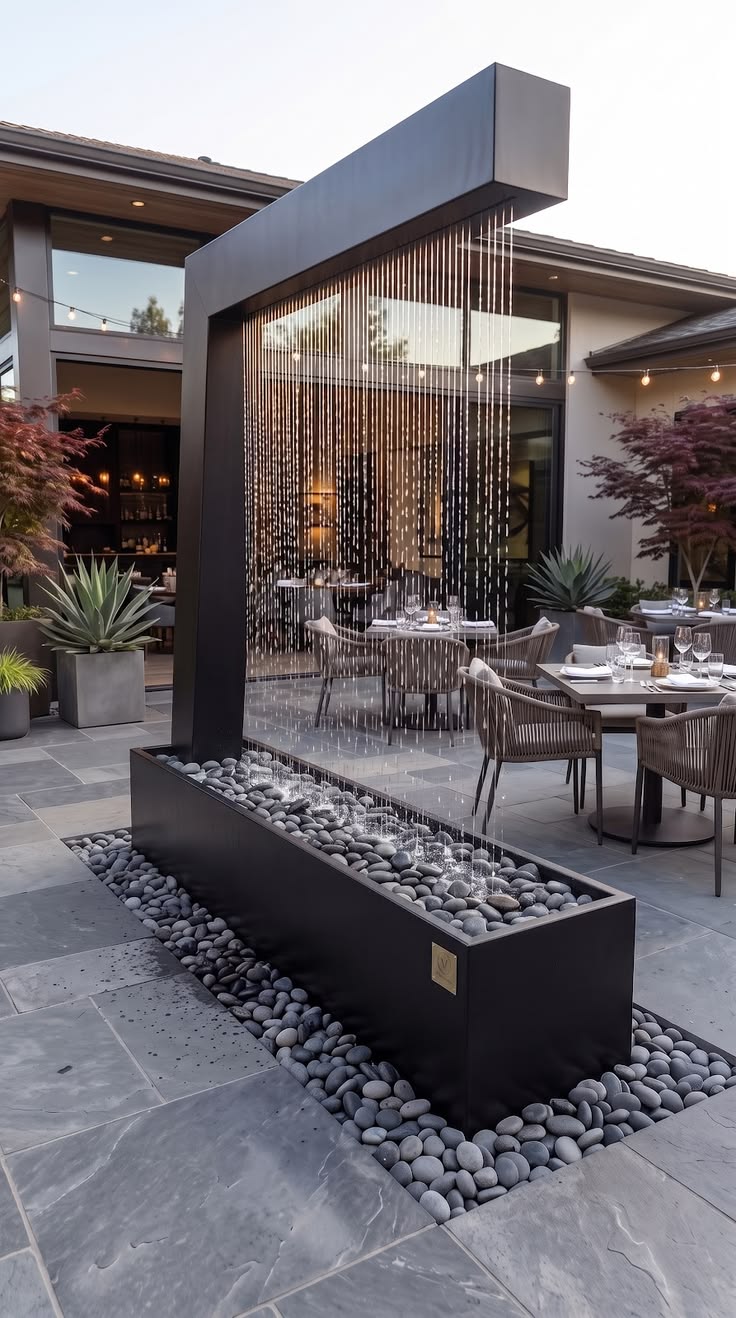
You do not need a garden to live with water. A wall fountain uses a vertical surface instead of a wide basin, so it can bring the full sound of a fountain into a courtyard, balcony or even an indoor corner.
Why a wall fountain works in a small space
A floor-standing fountain needs room around it. A wall fountain borrows the wall, so the footprint can be as little as a couple of square metres. The falling water still creates the same essential experience — movement, sound and reflection — without taking over the space.
1. Check the wall and the power point
Start with practicalities. The wall needs to be strong enough to hold the fountain and to stay comfortable with moisture. A nearby power point for the pump makes the installation simple. If a new connection is needed, plan it before the design is fixed.
2. Choose the sound level
Water falling from a greater height sounds stronger; a short fall into a shallow bowl is softer. In a small courtyard or an indoor room, an adjustable flow is useful — you can set it gently for daily use and increase it when you want a fuller sound.
3. Mind the splash
In a compact space, splash control matters. Look for a basin that catches the flow cleanly and a design where water does not throw outwards. This also reduces the amount of wiping and maintenance you will do.
4. Pick a finish that suits the space
Lighter stone finishes make a small area feel more open; darker finishes create a strong focal point. Texture adds interest up close, but very rough surfaces can be harder to clean. Choose a finish that matches how you will use the space.
5. Plan for care
A wall fountain needs a weekly water-level check and a pump and basin clean every four to eight weeks. Wiping splashes from the wall before they dry keeps marks from building up. Read the full care guide →
Indoor or outdoor?
Both are possible. Outdoors, a wall fountain adds sound to a courtyard without losing floor space. Indoors, it can bring calm to an entrance, a study or a living area — provided the wall and floor can handle moisture and the basin is well contained. Discuss the setting before the design is finalised.
Make it yours
If you have a particular wall in mind, a custom design can be shaped around its size and character. The 3D studio lets you explore the form, stone colour, finish and scale before you commit.
Design a wall fountain in 3D →
Frequently asked questions
How much space does a wall fountain need?
Roughly two square metres of floor area is often enough, since it uses a vertical surface. Check wall width, basin depth and access to power.
Are wall fountains loud?
It depends on fall height and flow. A low fall into a shallow basin is gentle; a higher fall is stronger. An adjustable pump lets you set the sound to suit the space.
Can a wall fountain be used indoors?
Yes, if the wall and floor can handle moisture and there is access to power and maintenance. Choose a contained basin and discuss the setting before finalising the design.
What material suits a small wall fountain?
Stone and stone-inspired finishes add texture without clutter. Lighter finishes open up a small space; darker ones create a focal point.
How do I maintain a wall fountain?
Check the water level weekly, clean the basin and pump every four to eight weeks, wipe wall splashes before they dry, and avoid harsh cleaners on stone.