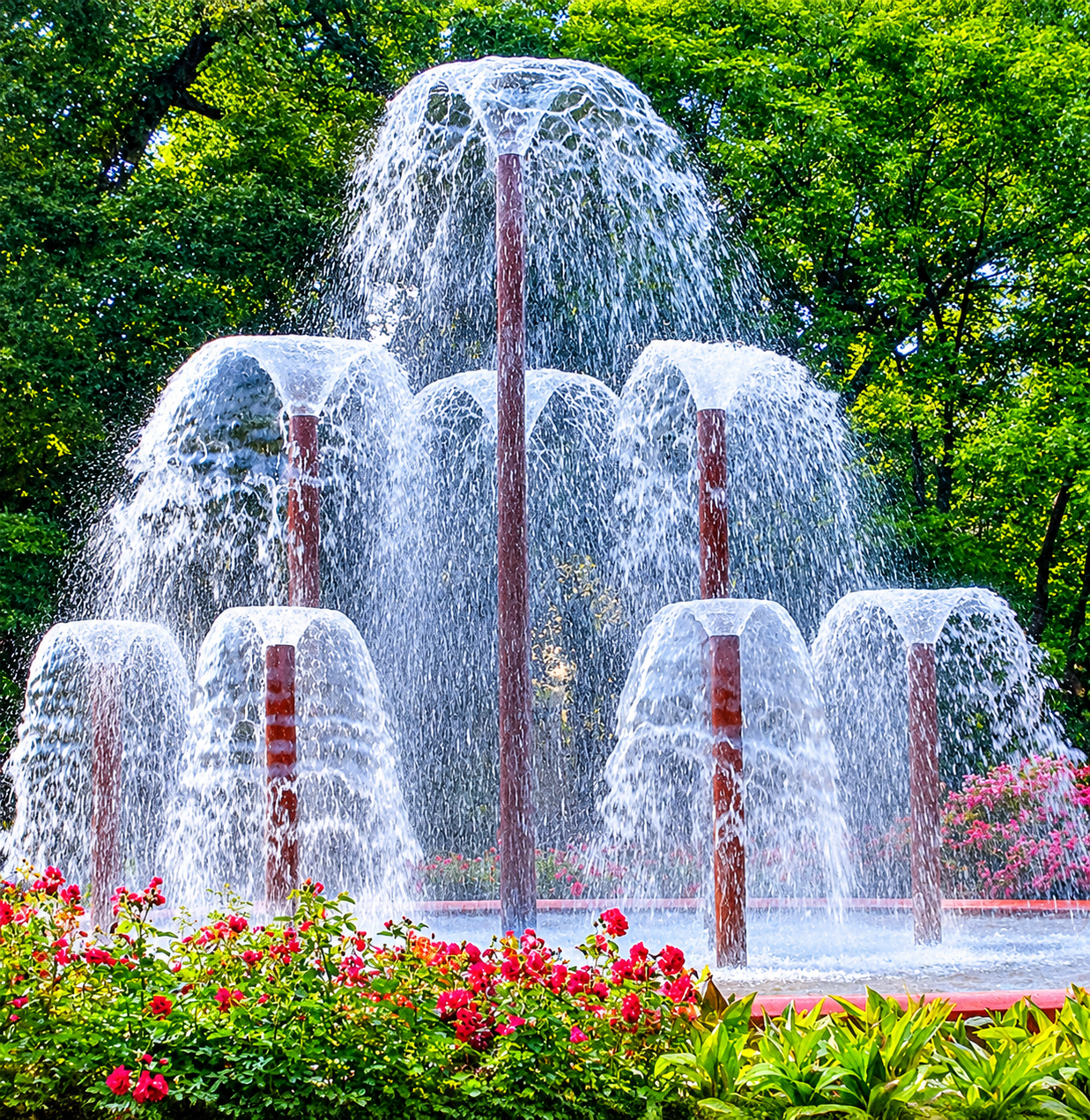
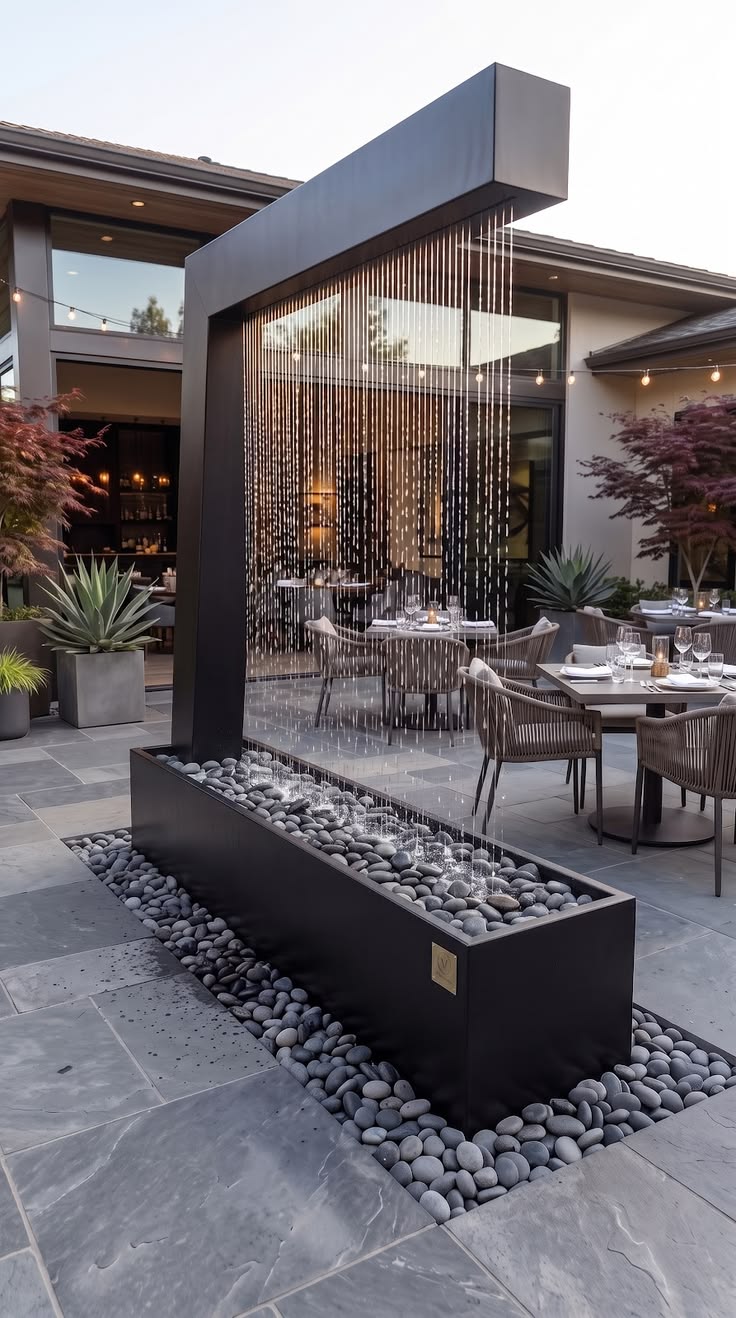
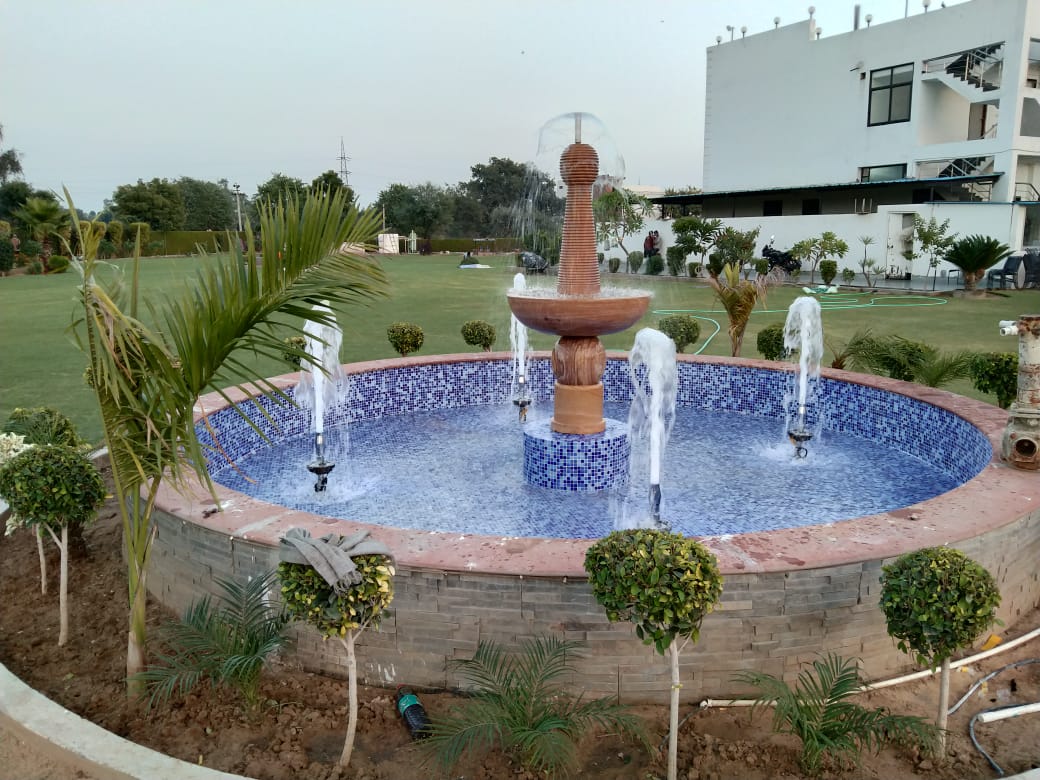
The best garden fountain is not the biggest or the most ornate one. It is the one that feels like it was always meant to be there — the right scale, the right sound and the right material for the space around it.
1. Start with the space, not the fountain
Before looking at designs, stand in the place where the fountain might go. Note how much room you actually have, where people sit or walk, and what the fountain would be seen against. A fountain against a plain wall reads differently from one in the middle of a lawn.
In a small courtyard or balcony, the aim is usually to add the sound of water without losing floor space. In a larger garden, the fountain can become a focal point that anchors the whole layout. Knowing which of these you are solving makes the next choices much easier.
2. Get the scale right
Scale is the most common mistake. A fountain that is too small disappears; one that is too large dominates everything around it. A useful rule of thumb: from the main viewing position, the fountain should occupy roughly a third of the visual width of the setting.
- Small courtyard / balcony: wall fountains, single-bowl designs, compact tabletop features.
- Medium garden or terrace: two-tier fountains, modest stone basins, narrow reflecting pools.
- Large garden, villa forecourt or hotel landscape: multi-tier stone fountains, broad basins, sculptural centrepieces.
Also think about height. A tall fountain works well against a wall or in a long view; a low basin feels calmer and safer where children move around.
3. Decide what kind of sound you want
Water makes different sounds depending on how it falls. A thin stream into a shallow bowl is soft and close. Water falling from a height is louder and more dramatic. A bubbling jet is lively; a still reflecting pool is almost silent.
If the fountain will sit next to a seating area, choose a gentle flow you can live with every day. If it is near a road or an entrance, a slightly stronger fall can mask outside noise. You can usually adjust flow with the pump, but starting with the right design is easier.
4. Choose a material that suits the setting
Stone and stone-inspired finishes remain popular because they sit naturally in a garden and develop character over time. A smooth, contemporary finish suits a modern villa; a carved, layered look suits a classical garden. The finish also affects care — textured surfaces can hold mineral deposits more visibly than smooth ones.
Ask about the exact finish, how it reacts to weather and what cleaning it needs. A material that looks beautiful but needs constant attention is rarely a good trade.
5. Think about water and power from day one
Most garden fountains recirculate water with a submerged pump, so they do not need a permanent water line. They do need a power point and a level, stable base. Check these before you commit to a design.
Consider where the water will be topped up and how it will be emptied for cleaning. A fountain that is difficult to reach becomes a fountain that is rarely maintained.
6. Plan for maintenance before you buy
Every fountain needs some care. A quick weekly check of the water level, a periodic clean of the pump and basin, and a little extra attention at the change of season will keep most features running well. fountains under trees collect leaves; fountains in dusty areas collect fine grit.
Read our season-by-season stone fountain care guide →
7. Understand what drives the cost
Fountain prices vary widely because the work behind them varies: size, material, carving detail, pump and lighting choices, and installation conditions all matter. Rather than comparing a fixed price list, compare what is included — the design, the finish, the pump, delivery and any installation support.
See what affects fountain cost in Kota →
8. Preview before you commit
The most useful thing you can do is see the design before it is made. Chambal Fountain's Custom Studio lets you choose a form, stone colour, finish, water tint and scale, rotate the 3D preview, and send the whole brief to the team on WhatsApp. It removes most of the guesswork from a decision you will live with for years.
Frequently asked questions
What size fountain is right for my garden?
A fountain should feel proportional to the space. From the main viewing point, it should occupy roughly a third of the visual width. Small courtyards suit wall or single-bowl designs; larger gardens can carry tiered stone fountains or reflecting pools.
Where should I place a garden fountain?
Somewhere it can be seen and heard from a seating area or entrance. A level, stable surface and access to power matter most. Avoid heavy tree cover if you want fewer leaves in the water.
Which material is best for an outdoor fountain?
Stone and stone-inspired finishes age well and sit naturally in a garden. The right choice depends on the look you want and the care you are willing to give it — ask about the finish and its care routine.
Does a fountain need a lot of maintenance?
Most need a quick water-level check and occasional pump and basin cleaning. Regular small routines prevent most problems; seasonal care matters more in cold winters or heavy monsoon rain.
Can I design my own fountain?
Yes. A reference photograph, sketch or clear description is enough to start. The 3D studio lets you choose form, colour, finish, water tint and scale before a quote is prepared.